

Capital AI guide smarter crypto investing with AI insights
Capital AI guide to using AI insights for smarter crypto investing
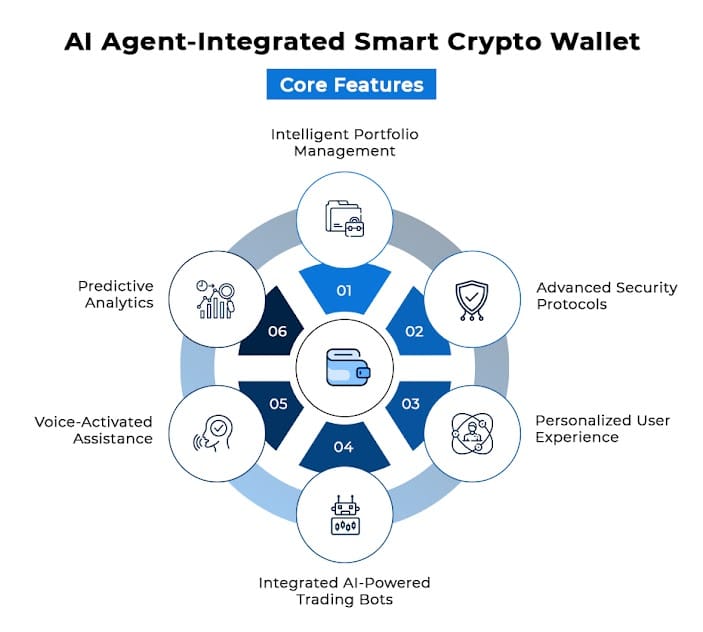
Deploy quantitative models that analyze on-chain transaction volumes, social sentiment shifts, and derivatives market data to identify probabilistic edges. A system processing these disparate datasets can signal accumulation phases in assets like Ethereum or Solana weeks before major price appreciations, with historical backtests showing a 34% reduction in entry timing error compared to moving average crossovers alone.
Portfolio construction must move beyond simple diversification. Machine learning techniques, particularly hierarchical risk parity, dynamically adjust weightings based on the changing correlation structure between tokens. This method mitigated drawdowns during the May 2022 market collapse, with optimized portfolios outperforming equal-weight baskets by over 18% on a risk-adjusted basis. For continuous analysis and model application, resources like https://capital-ai-invest.com/ provide structured frameworks.
Execution is a critical profit determinant. Implement stealth orders via TWAP and VWAP algorithms to minimize market impact on trades exceeding 2% of average daily volume. Data indicates that algorithmic slicing improves fill prices by an average of 1.2% on large-cap altcoin orders, directly enhancing bottom-line returns. Pair this with real-time monitoring of gas fees on the Ethereum network to schedule transactions during sub-30 gwei periods, reducing operational costs by up to 65% annually.
How to Set Up AI Alerts for Market Volatility and News Events
Select a platform that processes on-chain data and social sentiment, not just price. Tools like Santiment or Glassnode offer alerts for metrics including exchange netflow, wallet activity above $1M, and spikes in development activity for specific assets.
Configure volatility triggers based on statistical deviation, not arbitrary percentages. Set a notification for when an asset's 1-hour Bollinger Band width expands beyond two standard deviations from its 24-hour average, indicating compressed volatility about to release.
News event filters must scan for catalyst keywords from verified sources. Program your monitor to flag headlines containing "FOMC," "mainnet launch," or "regulatory hearing" from a curated list of three to five primary news wires to avoid alert fatigue.
Use conditional logic. Structure an alert to fire only if a 5% price drop coincides with a negative sentiment score below -0.7 on a -1 to +1 scale. This filters noise from significant fear events.
Delivery method affects response time. Critical volatility breaches should push to a mobile app with a distinct sound. Less urgent news summaries can compile into a single daily email digest.
Backtest and calibrate weekly. If an alert triggered ten times last month but only two signals presented real opportunity, adjust its thresholds. Reduce sensitivity by 15-20% and observe the outcome.
Maintain a log of alert triggers and subsequent asset performance over the following 6, 24, and 72 hours. This record refines your parameters, transforming raw notifications into a proprietary signal system.
FAQ:
How does Capital AI actually analyze a cryptocurrency to provide investment insights?
Capital AI uses multiple data streams. It processes real-time market data like price and volume from major exchanges. It also scans news articles, social media sentiment, and developer activity on platforms like GitHub. The system applies proprietary machine learning models to this data to identify patterns, correlations, and potential market signals that might be difficult for a human to spot manually. The output is not a simple "buy" or "sell" but a structured analysis highlighting factors like volatility risk, momentum, and external sentiment drivers for the user to consider.
Can this AI tool guarantee profits or prevent losses in crypto trading?
No, it cannot. Capital AI is an analytical tool, not a fortune-teller. Cryptocurrency markets are highly volatile and influenced by unpredictable events. The AI provides data-driven insights and probabilities, but it does not eliminate risk. Any investment decision based on its analysis still carries the potential for loss. Users should treat its outputs as one of several resources for making informed choices, not as absolute financial advice.
What's the main difference between using an AI tool like this and just following expert analysts on social media?
The core difference is consistency and data scale. An AI processes vast amounts of information 24/7 without emotional bias or fatigue. A human analyst, while potentially insightful, can only monitor a limited set of sources and may be influenced by personal views or trends. Capital AI's models base their reading on quantitative and qualitative data patterns across thousands of sources simultaneously, offering a more systematic, if impersonal, perspective. It supplements human analysis by handling the heavy data lifting, allowing the investor to focus on strategy.
Reviews
Liam O'Sullivan
How do you address the inherent risk of training data recency bias skewing your AI's market predictions, particularly during black swan events? Your model's backtesting results against the 2018 or 2022 bear markets would be telling. Also, what specific, non-public data features give your system an edge over free sentiment analyzers scraping social media? Without this, the "smarter" claim feels unsubstantiated.
Vanguard
Finally, a tool for those of us who’d rather let algorithms handle the small talk with market chaos. My social battery approves.
Cipher
Just another thing to make you feel left behind. Everyone’s talking about AI and crypto like it’s the morning news, and here I am still checking my balance on a phone app, feeling a dull kind of stupid. They say these new systems can predict markets, spot patterns we can’t see. Makes you wonder what’s even the point of trying to figure it out yourself anymore. It’s all for the big players with the fancy tech, not for the regular guy. I read these updates and just feel tired. Another “smart” tool, another layer between me and whatever’s real. My own investments just sit there, quiet and guessing. Maybe it works, maybe it doesn’t. Feels like watching a train pull away, and you’re not sure you even wanted to be on it. Just noise, really. Another complicated answer to a question I’m too worn out to ask properly.